
I see so many harsh headlines about ADHD. The one that stands out and sticks in my mind is, “Crush Your ADHD.” This approach seems self-deprecating. It treats people like they are a problem that needs to be attacked, much like hiring an exterminator to eliminate a termite invasion of your home.

Living in a world that wasn't designed for you.
ADHD diagnosis in adults has become more and more common. Adults already have a sense of self that is well ingrained. Many newly diagnosed adults feel disoriented or unsure of themselves when they learn that ADHD has had a hidden impact on their life. They need an adjustment period to make sense of things.
The diagnosis Attention Deficit Hyperactivity Disorder (ADHD) itself has a harsh negativity baked right in. It pathologises people who experience the world differently. It labels us as being broken and says that we need to be fixed.
Do you really want to attack your ADHD? Wouldn’t it make more sense to figure out how to make it work for you? ADHD isn’t all problems and disadvantages. Living with a different brain has advantages too.
I see ADHD differently. I didn’t grow up knowing why I wasn’t like everyone else. When I look back, it was probably an advantage. There was no label for how I was different that kept me contained in a stuck paradigm. I didn’t know I had diagnosable deficits.
Nobody told me the list of “symptoms of ADHD” that were holding me back. I was just living life.
I didn’t know that my brain wasn’t supposed to race with ideas, stories, and dreams all the time. It’s just the way I was. I grew up with this neurodiverse brain. I played with it. I spent time getting to know it. I experimented with it. My hyperactive thoughts were part of my daily life. They still are.
I learned how to live with my brain and its unique executive function in harmony. I developed a different way of seeing the world and where I was in the whole scheme of things. I never worried about lower levels of dopamine. My ADHD symptoms went unnoticed. Things were hard, but I didn't know it was easier for others.
Adjusting to ADHD life
After I assess a client and they qualify for an ADHD diagnosis, there are usually adjustments to make. An ADHD diagnosis in adults can bring up questions about your past. On the other hand, it can also clarify some difficult struggles you have been through at different times in your life.
With a new diagnosis, you can see yourself through a different lens and expand how you think about and process things. You might be able to see what went "wrong" in your past. You have the opportunity to embrace new possibilities.
ADHD diagnosis in adults changes your experience in the world.
I've learned a lot from my ADHD brain.
I found my own best ways to traverse the world. They made sense to me, and they worked. I may have ADHD, but I found interesting things to keep me on track.
Understanding ADHD made a big difference for me. I found ways to indulge in the things that I was passionate about. The differences in the brain brain in my head allowed me to get creative and learn to do what is best for me.
There was a lot of feeling lost, sad, and left out. After many years of looking from the outside in, I realized that trying to be someone I’m not isn’t only not going to work, it’s not going to make me happy either.
I learned that living with my brain instead of fighting against it reduced my stress and helped my life run smoothly. I realized I needed to change gears and embrace my differences. I needed to open up my mind and forget about “supposed to.” Instead of seeing only one way, I needed to see a “pile of stuff” that could be configured in many different ways. I just had to play around with the pieces until I figured out what I wanted to create.
Understanding ADHD from a different angle
I realized that if we start by recognizing all the things our brains do differently (the pile of stuff) and all the opportunities those things present, we can see the possibilities they hold for our lives. Once we have that figured out, we decide what we want and take action.
Living with a attention deficit hyperactivity disorder is different. I have to think about my life differently in order to figure out what works for me. Understanding ADHD helps.
With a new perspective, I can make changes and decide what fits the way I think so I can be more comfortable. It is also easier for me to give myself permission to be authentic and embrace new possibilities.

The ADHD brain has different structure and function.
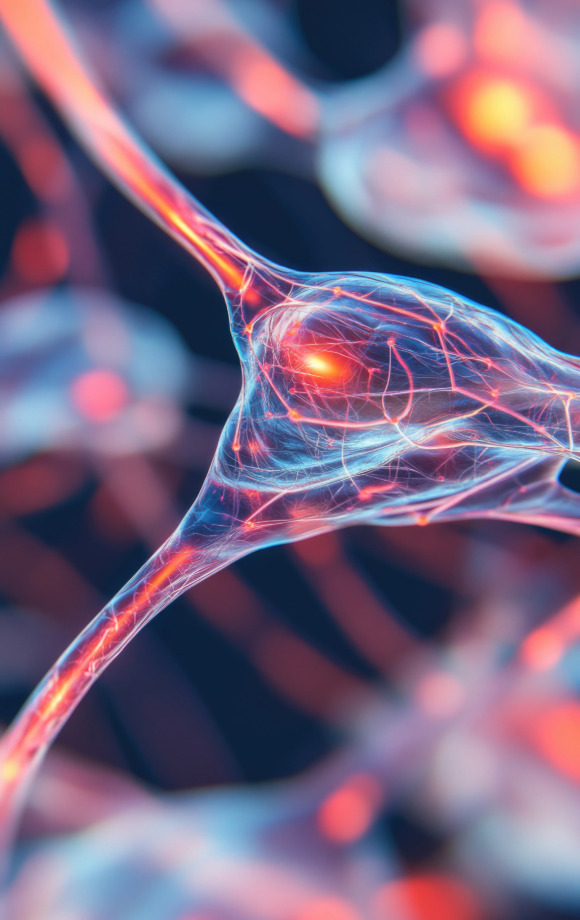
Research has shown there are actual structural differences between ADHD and neurotypical brains. These differences explain the different ways of being that are associated with attention deficit hyperactivity disorder. You didn't choose this or somehow cause differences in your brain structure. Your brain anatomy developed differently from the very beginning.
People with ADHD aren't lazy or damaged. The ADHD brain differs for a reason. ADHD may just be a natural difference to assure variety. ADHD affects many parts of daily life. It can help us create new ways of doing things that may not occur to those with neurotypical brains.
Part of the brain structure in ADHD allows for mind wandering. In school, this was probably a bad thing. My third grade report card said, "Rachelle looks out the window far too much." However, in an innovative environment, mind wandering helps us explore thoughts and ideas and come up with unique solutions and ideas. What's discouraged in one setting is highly valued in others.
ADHD brains create unique individuals. "Noisy" Attention deficit hyperactivity disorder brains have lots of ideas.
Understanding ADHD and how our brains are different makes it easier to live in a neurotypical world.
ADHD and Innovation
The world is always looking for different. Society seems to value differences in some categories and not in others. I see it as a work in progress looking for homeostasis. Different and equal will be beautiful when it is realized.
Innovation is a common buzzword that wouldn’t exist if everyone had carbon-copy brains. That makes different good, no matter what the prevailing societal norm happens to be. We can help morph the concept of different and dilute the fear it holds.

Innovation is sought after in our society. People want to be part of the next new trend breaking thing. Different is interesting and exciting. A new way of thinking, being, doing, or seeing brings a fresh perspective to life. Differences make change possible.
Without attention deficit hyperactivity disorder, innovation would probably be lagging behind. ADHD minds have an uncanny ability to conjure up and embrace new possibilities. This kind of creativity moves technology and mindsets forward.
Studies show that the ADHD brain can be especially valuable when it comes to creating something new and innovative. A neurodiversity-friendly ecosystem creates an atmosphere where creativity and innovation thrive.
Attention deficit hyperactivity disorder can be a catalyst for change.

Diagnosed with attention deficit hyperactivity disorder later in life: ADHD diagnosis in adults
An adult ADHD diagnosis doesn't mean you've been doing life wrong up until now. Now you know about the differences in the structure of your brain. You get a new way of seeing the chemical messengers in your brain doing things differently. It explains the feelings of being on the sidelines feeling like you don't belong. Now you know you belong to a different tribe. There are more people out there in the world who are more like you.
Create an environment you can thrive in: Make lifestyle adjustments for ADHD control
You don’t need to fight yourself. Your individuality is valuable. There is nothing to “crush.” Instead, it’s about noticing and blending to figure out how to make your assets work for you. There are many parts of your ADHD that help you grow, learn, and move forward.
Start by creating an environment that meets your needs. Pay attention to what bothers you and what nurtures you. Build an environment that helps you care for yourself and focus on what you want to do.
Feeling stuck and unmotivated are signs you need to do something different. Explore instead of nurturing despair. You don’t need to change who you are. You are already a valuable human being. You can rework your personal concept of how you live to fit with your core self. When you resonate fully with who you are and see your value, life looks different.
Get Creative
Your creativity is allowed to come out and play. Your attention gets focused and purposeful as you hone in on things that matter to you. It becomes easier to take care of yourself so you can continue on and discover new things about yourself and what you can do.
You can start anywhere. You don’t have to be linear or follow someone else’s rules. When the real you gets going, innovation happens. You have ideas that flow and morph until you find something that fits your needs. You don’t have to slow down or hold back. You don’t need to use techniques that weren’t made for you. You can build your own that fit you like a custom-made shoe.
When you allow yourself to function in a way that works for you, getting yourself to take the next step isn’t a problem. You want to do it. You can learn to quiet the things that might get in your way.
Attention deficit hyperactivity creates the need for a different lens and a different environment. It doesn't require you to change all your dreams and plans. You may just need to get there using a different route. You may need to use your creativity to make lifestyle adjustments for adhd control.
Give yourself permission to be authentic.
This way of thinking and being isn’t really a change. It’s more of a paradigm shift of allowing you to be you. It’s about working with yourself just the way you are. There is no need to twist yourself up and force yourself into a small, confining box. Being you is the answer. Not being you holds you back and creates roadblocks.
There is no workbook, or course that holds the answers for you. Your answers are already in you. You just have to dig them up, examine them, and decide which ones fit you right now. You need the questions that will help you uncover your answers and some lifestyle adjustments for adhd control.
There is no one-size-fits-all blueprint for life. We all deserve our own unique design. Yes. You deserve your own customized life, one you can thrive in and have permission to be authentic.
Embrace New Possibilities
The process is not a battle. It’s a treasure hunt. Building your ADHD life doesn’t have to be ugly and painful. It can be interesting and enjoyable.
Attention deficit hyperactivity disorder isn’t a curse. It is a different way of thinking and being. You aren’t at a huge disadvantage compared to others. You have different strengths and insights.
You just need to find your way of being in this world. Re-imagine your life. When the world isn’t designed for you, you can find ways to remodel your experiences. It won’t happen overnight, but you can get to where you want to be. If you don’t know it’s possible, you won’t try to do it. It is possible to thrive. It is possible to see possibilities where everyone else sees nothing.
You don’t need to conform and blend in. Be weird. Stretch your mind. Embrace innovative solutions. You’ll be amazed at what you find. Remember that you have permission to be authentic.
You might even enjoy life!
ADHD doesn't mean you can't live the life you want to live.
You can thrive with ADHD.
I’m not going to tell you it’s easy and there isn’t any work involved. Nobody has it easy no matter what kind of brain they have. There are always pluses and minuses. It takes time to find your own balance.
A big part of it is to be inquisitive and patient with yourself. Seeing neurodiversity as something you have to figure out rather than fight with is a good place to start. Once you understand your neurodiverse ways of being, you can figure out lifestyle adjustments for adhd control that will work for you.
Embrace new possibilities!

Frequently Asked Questions - FAQs
I tend to get lots of questions about ADHD. Here are the questions I'm hearing the most lately.
Which brain regions are affected by ADHD and how do they contribute to creativity?
Multiple brain regions are different in ADHD. The prefrontal cortex located in the frontal lobe above your eyebrows tends to be less efficient. The ADHD brain has lower prefrontal function, which allows for more creativity. The lower activity allows for mind wandering and the generation of creative ideas and solutions. (Mind wandering and creativity can be very good things to have.)
The lower function of the basal ganglia disrupts linear thinking and allows more free form thought, while there;s increased activity in the cerebellum. Increased activity in the cerebellum supports the ability to expand the skill of problem solving. This allows for more outside-the-box-creative thinking.
The hippocampus is a bit of a mixed bag. Some studies find them to be larger in ADHD and some smaller. Creativity amps up the amygdala and might be responsible for boosting the neural networks and altered activity connectivity.
What strengths are commonly associated with the ADHD brain?
The ability to focus on one thing and shut out everything else is common in ADHD. This intense focus on personal interests is called hyperfocus. It can help you go deep into a subject without distraction to learn, generate ideas, and problem solve. It can be the cornerstone of quick solutions and ideas in a demanding situation.
Other strengths include a strong sense of social justice, empathy, adaptability, risk tolerance, creativity, resilience, pattern recognition, and the ability to think beyond boundaries. Strengths like this are powerful assets in collaborative teams, creative innovation, and problem solving that requires quick thinking or the ability to pivot when circumstances change.
How can someone with an ADHD brain improve focus and productivity?
Environment is very important when it comes to focus and productivity. The ability to create an environment that includes elements that are helpful to you will support your ability to focus and increase productivity.
Conserving energy by eliminating distractions and things that stress your nervous system gives you more energy to focus on the task at hand. For some this will include tight structure, while others will thrive with loose scaffolding. Effective strategies need to be tailored to each individual.
A big part of successful lifestyle adjustments for adhd control is a foundational understanding of who you are, what's important to you, how you are impacted by outside influences.
Are there lifestyle changes that support a healthy ADHD brain?
Yes. A healthy diet with daily dark leafy greens, nuts and seeds, beans and berries provide your brain with the nutrients your brain needs for fuel. High-quality, nutrient dense foods packed with vitamins, minerals, and antioxidants support networks in the brain. Without them, your brain won't be able to function at its best.
Together, rejuvenating sleep, a balanced diet, moving your body regularly, simple self-care like taking breaks and stress-reduction support brain function. Your brain also needs brain needs downtime and variety. Allow time to daydream, enjoy crafts and other recreational activities that help your brain find calm.
Spend time in comfortable social situations to give your brain a different kind of exercise. When you have a conversation, your brain works differently than when you are thinking and working alone. Environments that allow movement or hands-on engagement also help your brain regulate and reduce overwhelm.
What role do routines and structure play for someone with an ADHD brain?
Routines and personalized structure use external scaffolding to reduce cognitive demands and diminish impulsivity. Clarity and repetition can make it easier to initiate and complete boring everyday tasks.
Clear, predictable routines eliminate the need for constant decision making that can cause fatigue and anxiety. Visual schedules, specific places where things belong, and consistent morning/evening habits that require little thought make the dull parts of daily life more tolerable.
Routines are important lifestyle adjustments for adhd control. They make it easier to get the boring things done and get to the good stuff.
How can workplaces or schools better support people with an ADHD brain?
Start by asking each individual what supports work best for them. Even young children can tell you what they need to self-regulate.
Allow employees to break projects down in a way that makes sense to them. Give them the opportunity to work in an environment that best suits their needs. Be flexible with work schedules and locations. Requiring time in an environment that is overwhelming or stressful will not produce the best results. A free-flowing workplace with few restrictions will support the most creative and exemplary work.
Students need a safe environment they can thrive in. They need to take care of their nervous system so they don't get overwhelmed and over stressed. Students of all ages need autonomy to meet their needs. The ability to leave the classroom for a quiet space to recharge can be the difference between struggle and success.
How can families and friends best support someone with an ADHD brain?
Listen to what your loved one needs to be successful. Focus on their strengths and abilities. Help them create an environment that supports the ability to plan, maintain focus, and regulate attention.
Create an environment lets them know that it's safe to give themself permission to be authentic. This way they can let their guard down, relax and feel more comfortable in their surroundings.
You can be supportive by offering practical assistance with organization. Be sure to maintain a patient and nonjudgmental communication style, celebrate their strengths and achievements, respectfully collaborate on routines and reminders, and suffest professional resources when needed.
Understanding ADHD as a different way of thinking and focusing on solutions rather than using blame and forcing your ideas helps build stronger relationships and empowers them to use their abilities effectively.